
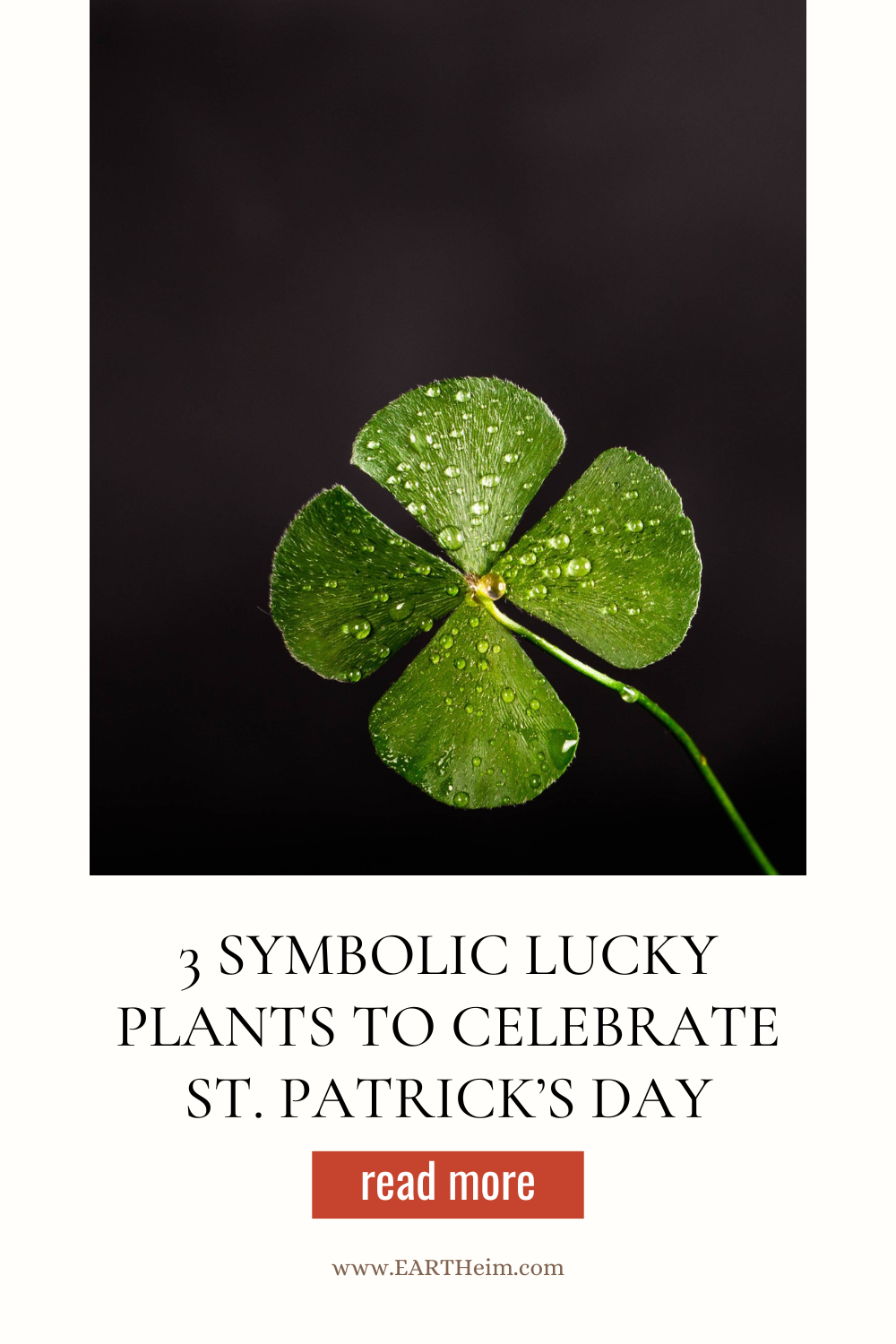
Saint Patrick’s Day is celebrated each year on March 17 and is associated with luck, good fortune, and an Irish spirit of joy. While shamrocks are the most iconic symbol of luck associated with this holiday, there are other flowers and plants that hold similar meanings of prosperity and good fortune across cultures. As we approach this festive day in a few days, let’s explore three plants that are believed to bring good luck: the shamrock, lucky bamboo and pothos.
1. The Shamrock (Clovers of Ireland)
The most famous lucky plant, the shamrock, is a well-known symbol of Saint Patrick’s Day. The shamrock is a three-leaf clover and holds deep significance in Irish culture. Saint Patrick is the patron saint of Ireland. He famously used the three-leaf clover to explain the concept of the Holy Trinity—Father, Son, and Holy Spirit—during his missionary work in the country.
Aside from its religious symbolism, the shamrock is seen as a symbol of good fortune. The three leaves are also said to represent faith, hope, and love. In ancient Celtic beliefs, the shamrock was thought to possess magical properties and was believed to ward off evil spirits. As a result, wearing a shamrock on Saint Patrick’s Day is thought to bring good luck and protection for the year ahead. The little plants are sure to bring a sense of Irish charm and good fortune to any celebration.

The Four-Leaf Clover
The four-leaf clover is a rare find and considered even luckier. It is estimated that for every 5,000 to 10,000 three-leaf clovers, there is one four-leaf clover. The four-leaf clover’s association with luck spans beyond Irish traditions. In other cultures, the plant is thought to protect against evil and to offer blessings of prosperity. The rarity and difficulty in finding a four-leaf clover have made it a popular symbol of good luck, and finding one is often considered a special sign of serendipity. One time, I even found a five-leaf clover! I thought finding one of those was lucky.
2. Lucky Bamboo (Dracaena sanderiana)
Lucky bamboo, often used in Feng Shui, is a plant that brings an entirely different type of luck. Lucky bamboo is rooted in Chinese culture and is not actually a true bamboo species but rather a variety of the Dracaena plant. This plant is believed to bring prosperity, wealth, and good fortune to its owner. It is often given as a gift for new beginnings, such as housewarming gifts, or to celebrate a special occasion like a birthday or a new year.
In Feng Shui, the number of stalks in the lucky bamboo arrangement has different meanings. For example, three stalks represent happiness, five stalks bring abundance, and eight stalks symbolize wealth. Placing a lucky bamboo plant in the home or office is said to promote positive energy and create a harmonious environment, which is why it is considered lucky. It is an easy-care plant which makes it a popular choice.

4. Pothos (The Money Plant)
Another plant tied to good fortune is pothos, which is a common houseplant. This lush, trailing vine is known for its ease of care, making it a favorite among plant lovers. Beyond its attractiveness, pothos is believed to attract wealth and prosperity, making it a popular choice for those looking to invite good fortune into their homes.
In Feng Shui, the pothos plant’s long, cascading vines are seen as a symbol of energy flow, or “chi.” When placed in the wealth corner of your home (the farthest left corner from your front door), it’s thought to help draw in financial prosperity. Its heart-shaped leaves also symbolize growth and longevity, making it a great addition to any space looking for a bit of luck.

Celebrate with These 3 Plants
As Saint Patrick’s Day draws near, these plants serve as powerful symbols of luck and good fortune. Whether you’re celebrating in traditional Irish style with shamrock decorations or adding a touch of Feng Shui with lucky bamboo, these plants are perfect for inviting a little extra luck and plant magic into your life!