
This property has had extensive drainage work due to a lot of underlying bedrock near the surface. This is not uncommon in our inner Bluegrass region of Kentucky. We often hit rocks when digging gardens and excavating. This area is unusual in that there are large slabs of bedrock sometimes not even 6″ below surface level.
The home of this property sit on top of a hill, with the front and backyards sloping downhill. Even so, the property owner has had issues with water not flowing away from the home.
The first year of this project was creating 2 large rain gardens which naturally collected water runoff from the property. The homeowner wanted to contain the water on the property and not make the rainwater their neighbor’s problem. What a great neighbor!
The rain gardens were dug quite deeply, which made planting difficult due to bedrock. We had to start with many smaller plants. As soon as we planted the garden, our area received a large rainstorm, and the garden was literally a pond that was not draining due to the bedrock. It was toward the end of the season, and we had no idea if the plants would make it.

Swamp milkweed thrives

Native hibiscus loves the water
However, the plants not only made it, they thrived the next year. It made me realize how much taller and bushier plants will get if they receive water! The biggest threat to the garden was not the temporary flooding, but the rabbits.
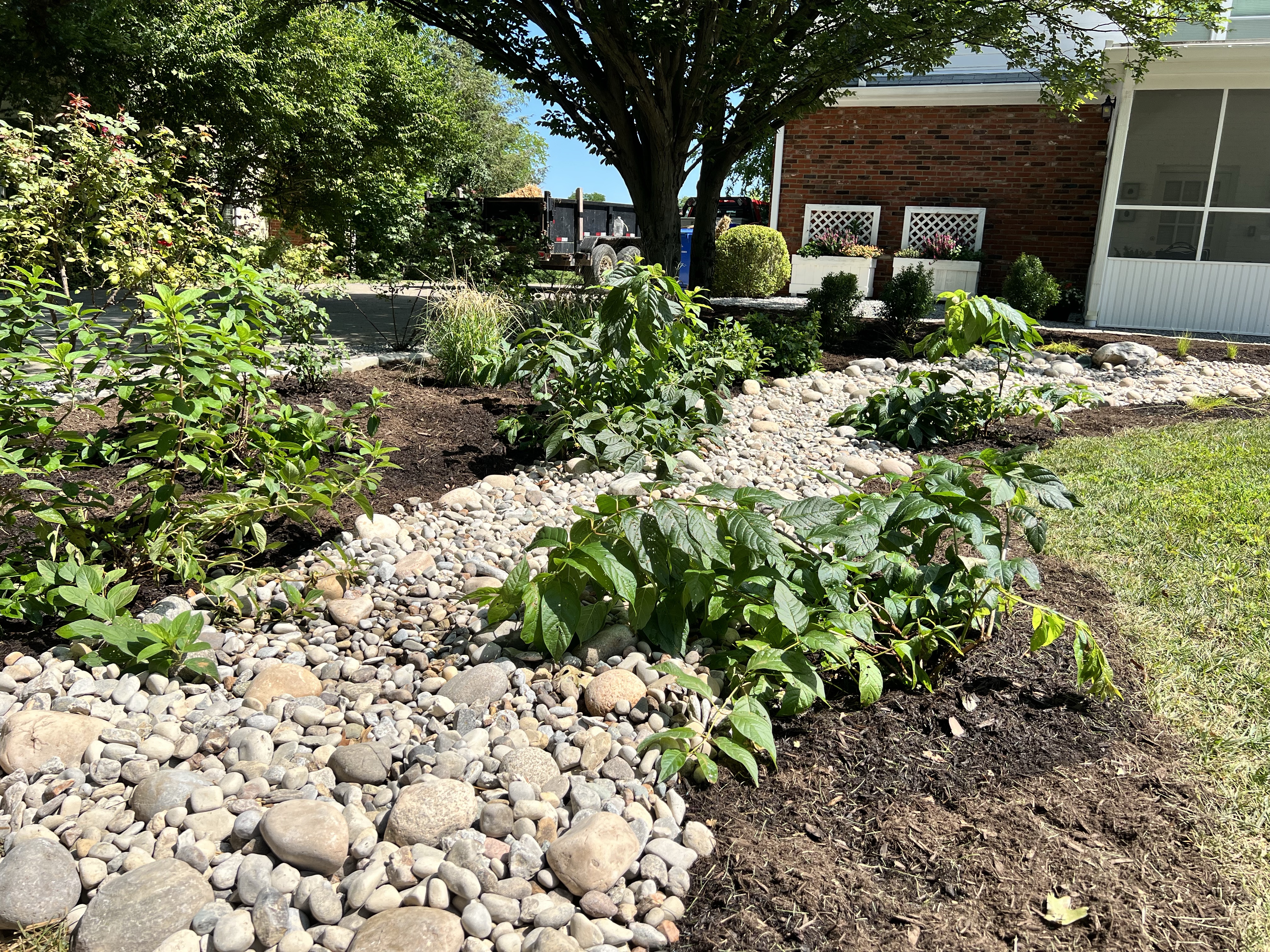
The next phase of the project the following season was to excavate a drainage swale, or also called french drain, near the house which would direct water to the rain garden. However, this swale would also need to decorative and become a unique feature of the garden. We dug the swale, filled with decorative river rock and cobblers, and planted rain garden plants around the edges of the swale.
I chose plants that could tolerate dry soil, and also wet soils. The plants were an important part of the design because they will establish roots that will stabilize the soil around the swale, and absorb excess water in the area.
My contractor said this was one of his favorite projects because of the way we used the stone to look like a creek.
Again, right after this swale was installed, a large rainstorm came! The homeowner immediately contacted me with excitement about the results from this swale. He noticed no pooling around the area we had worked, and noted that the rainwater in the rain garden was not as silty, which means there was less erosion occuring. This is another great benefit of the dry rock swale we created.

The sedges are highly adaptable and create a fun effect with their wispy strands.

Gray Headed coneflower, Tall Phlox, Black Eyed Susan, and Joe Pye attract many pollinators and birds. The roots stablize the soil preventing erosion, and the plants soak up water from the area.

French drain with rain garden in background